Medically Adaptive Apparel Context Map
The Ask
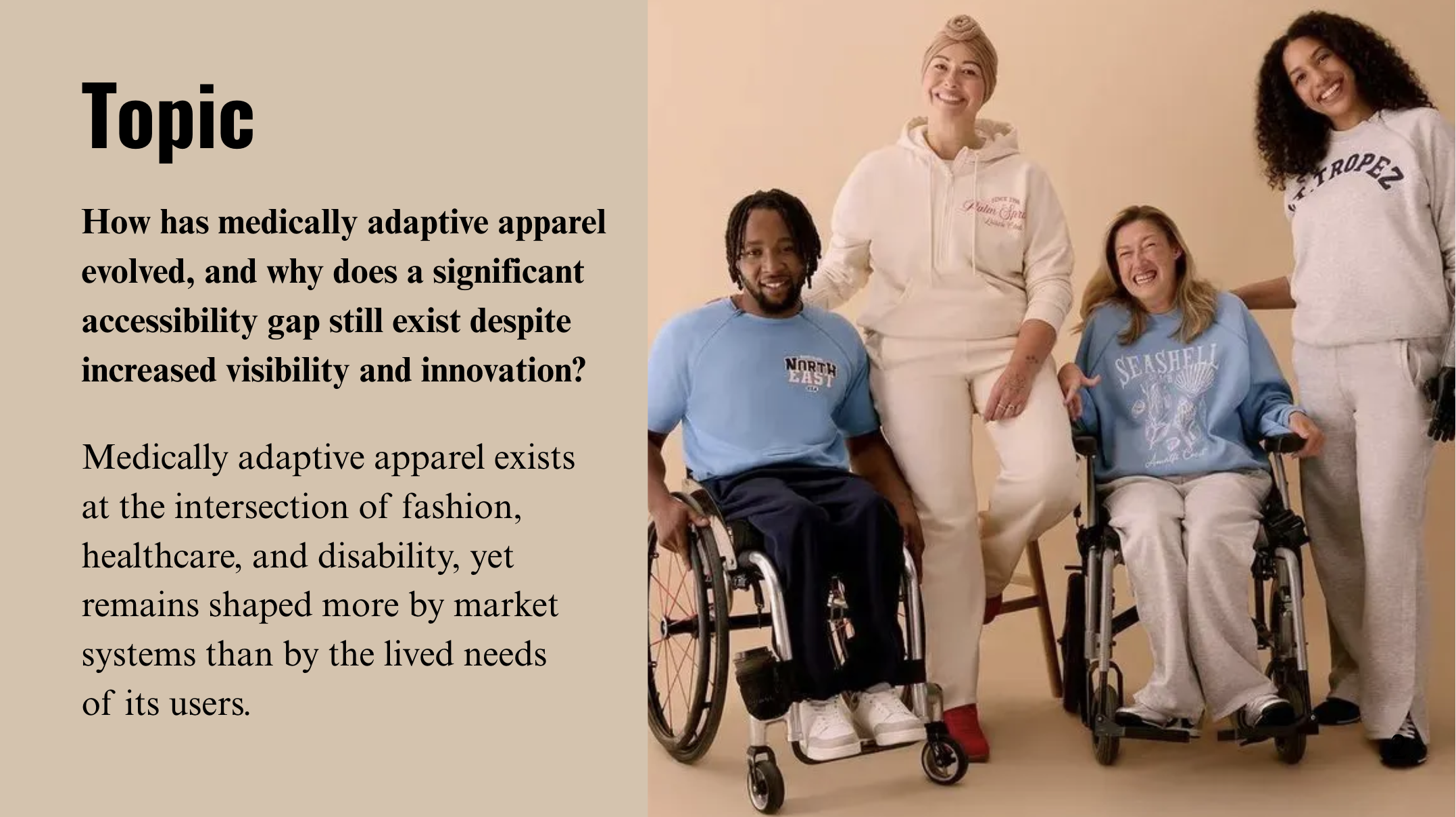
The objective of this project was to create a comprehensive context map for a chosen topic of interest, which for me was the research and analysis of medically adaptive apparel. The goal was to investigate how this sector has evolved and why significant accessibility gaps persist despite increased industry innovation and media visibility.
Skills Used
Critical Analysis
Secondary Research
Graphics/Visuals
Systems Thinking
Research and design
My research process involved tracing the evolution of adaptive clothing from pre-1990s medical necessity to current market-driven recognition. I developed several visual frameworks to organize my findings:
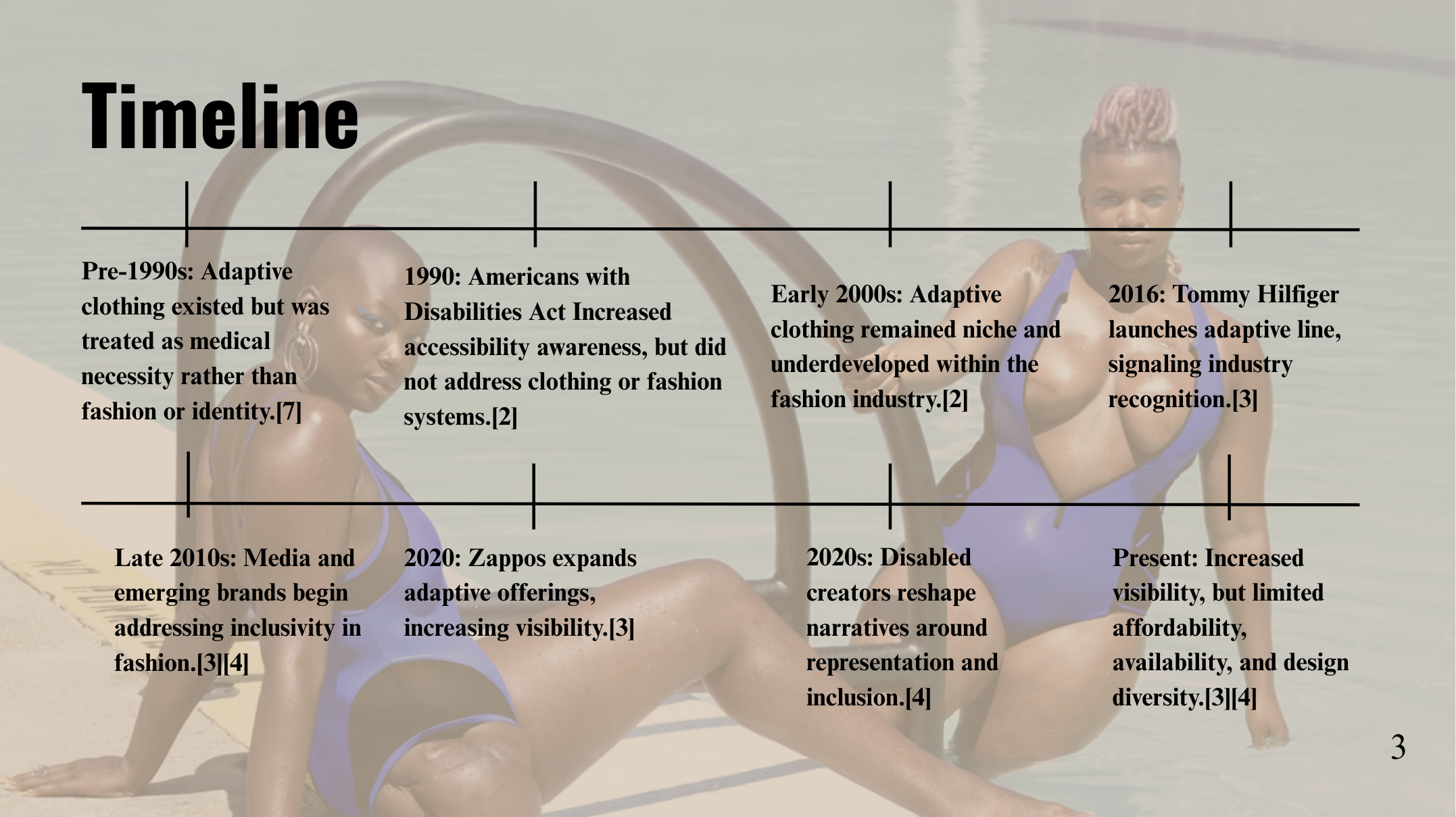
Historical Timeline:
Documenting key milestones from the 1990 Americans with Disabilities Act to the 2016 launch of Tommy Hilfiger’s adaptive line.
Core Tension Identification:
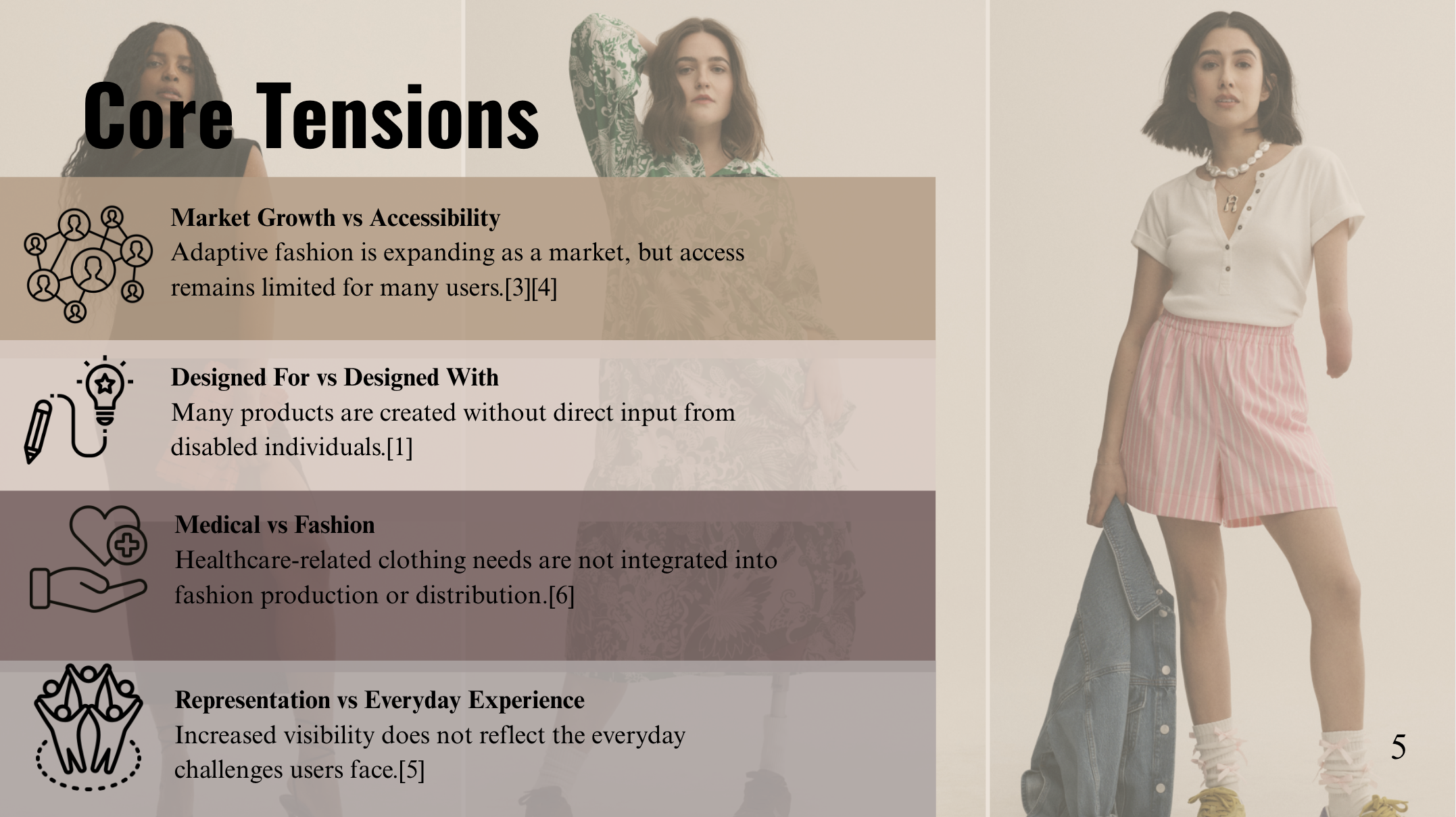
Analyzing the disconnect between "Market Growth" and "True Accessibility," as well as "Function" versus "Identity".
Stakeholder Mapping:
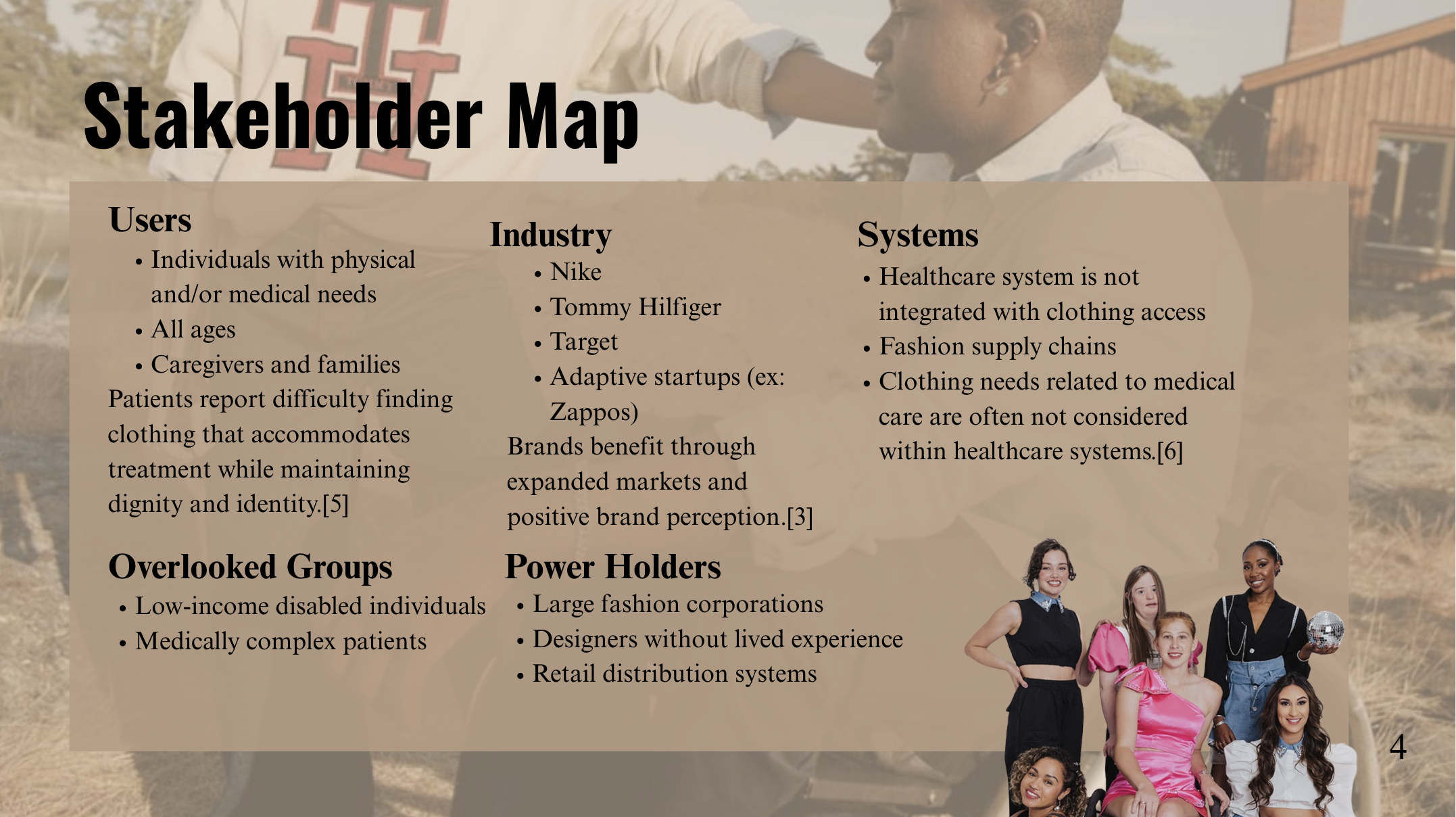
Identifying the relationships between users (patients and caregivers), power holders (large fashion corporations), and systemic barriers (healthcare supply chains).
The Outcome
The final context map provided a holistic view of medically adaptive apparel as a broad landscape, rather than focusing on a single adaptation or age group.
This project helped me:
Generalize Industry Knowledge: I gained a foundational understanding of the entire sector without it being tailored to one specific medical need.
Deepen Previous Research: The background research provided vital context that informed and enhanced my previous fashion scholarship case study, which focused specifically on medically adaptive apparel for teens with cancer.
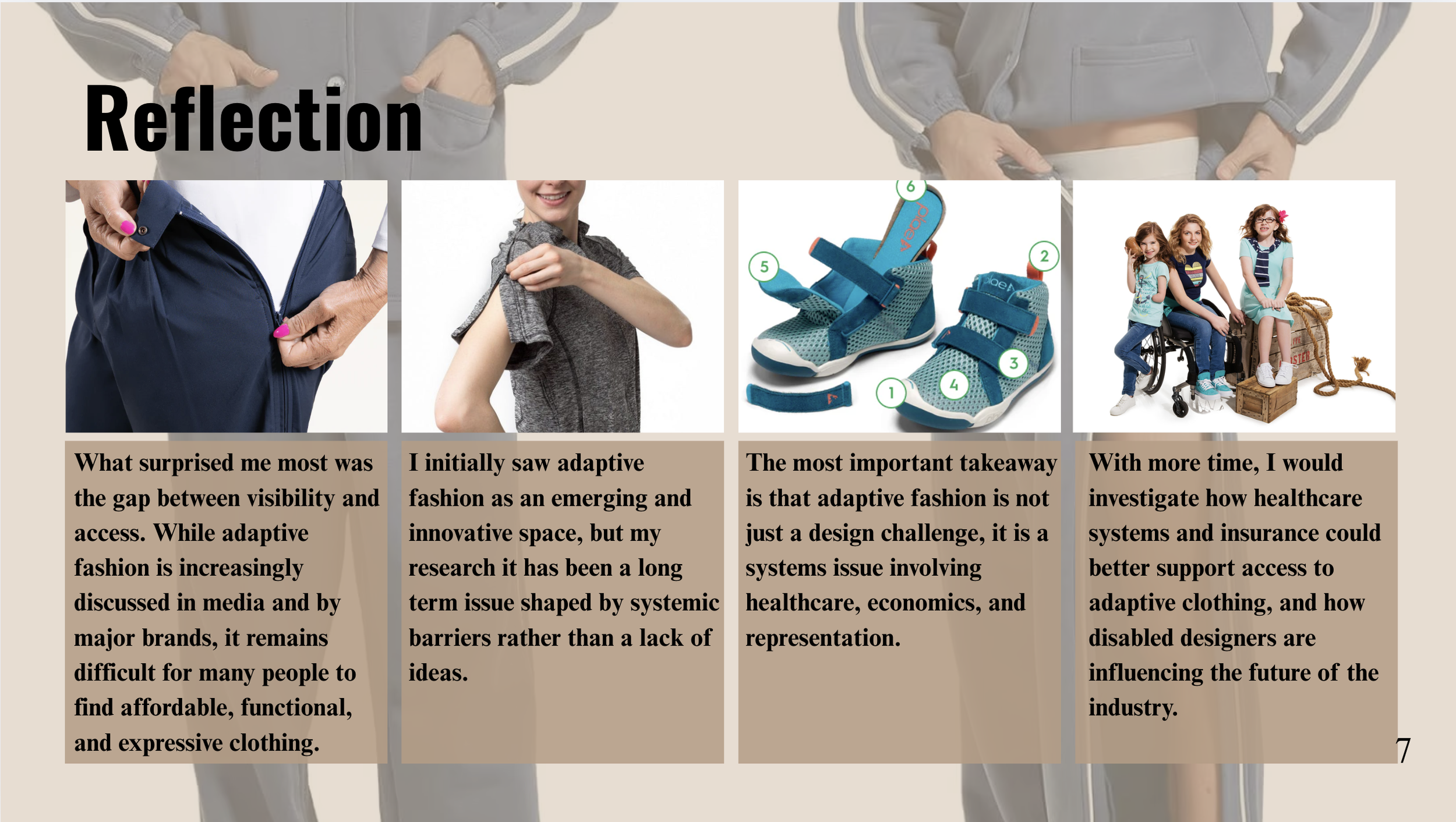
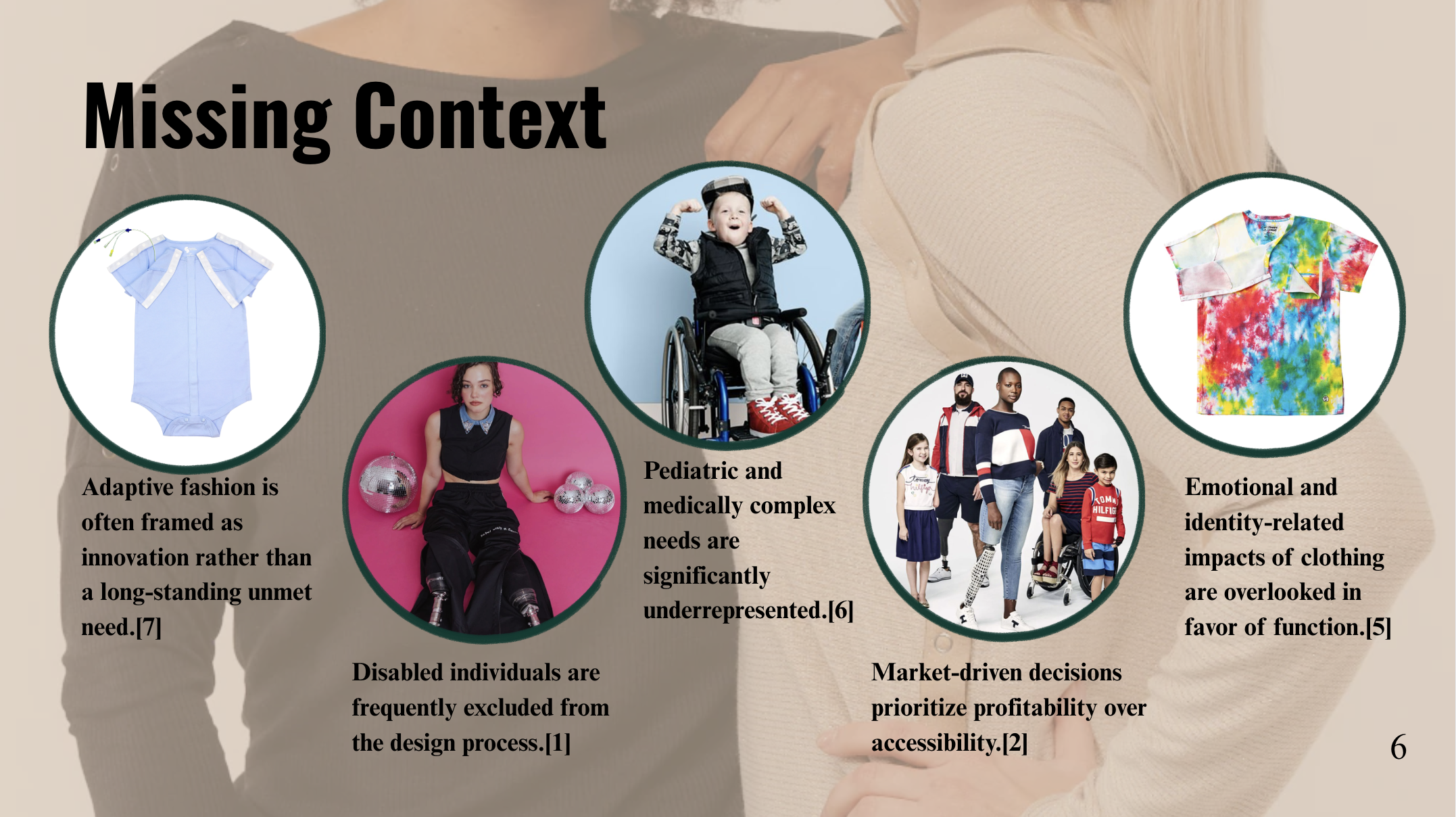
Identify Systemic Gaps: I realized that adaptive fashion is often incorrectly framed as a new "innovation" when it is actually a long-standing unmet need shaped by systemic barriers in healthcare and economics.