Cyanotype Printing: Turning a Garment into a Story
The Ask
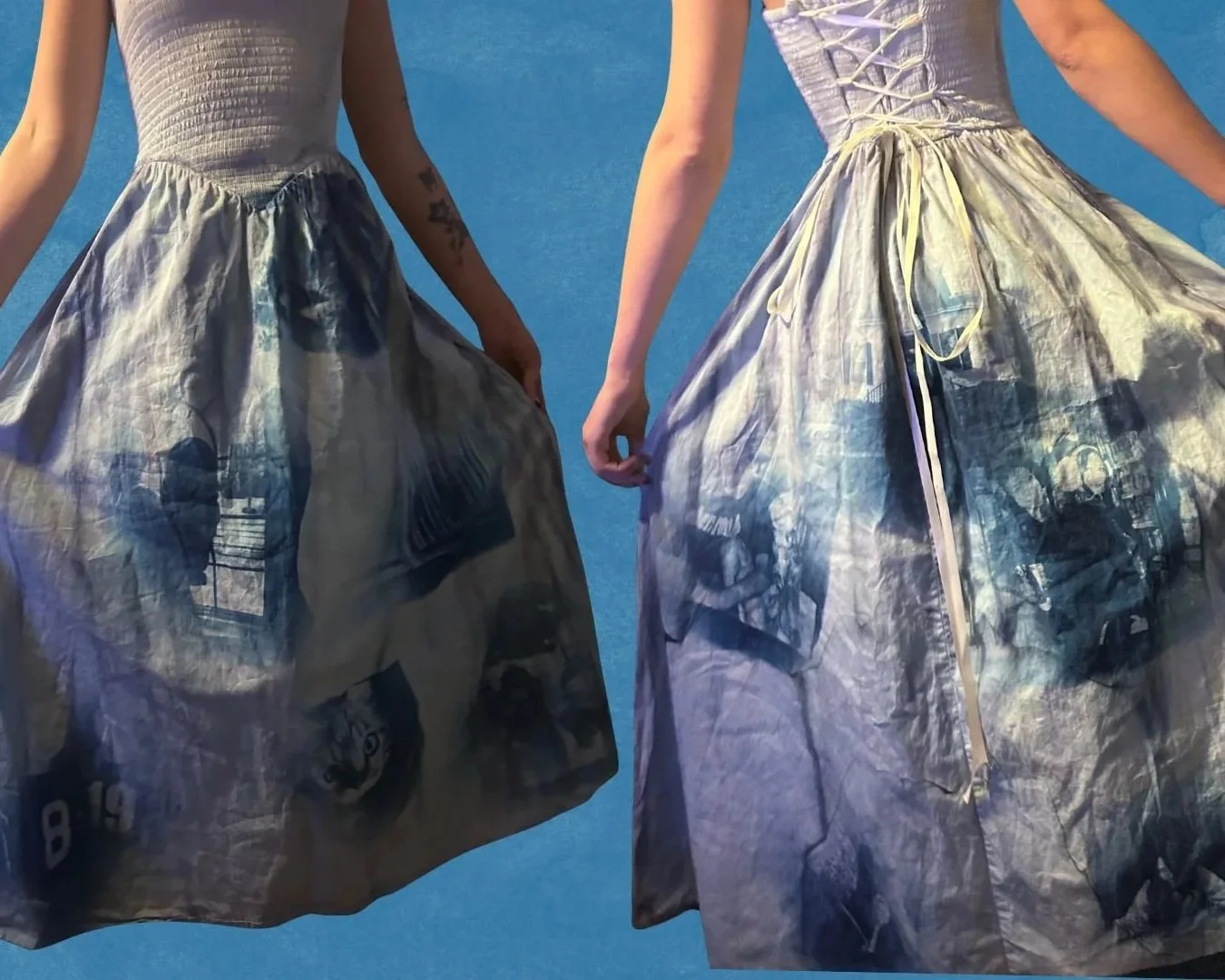
For a personal interest project in my textiles course, I challenged myself to explore an alternative printing technique by transforming a garment into a storytelling piece. The goal was to use cyanotype printing to translate personal photo memories onto fabric, creating a dress that functions as both clothing and a visual narrative.
Skills Used
Creative direction
Problem-solving & adaptability
Technical dye application
Time management
Textile experimentation
Adobe Photoshop (image editing + negative creation)
Garment design & layout planning
Photo Process
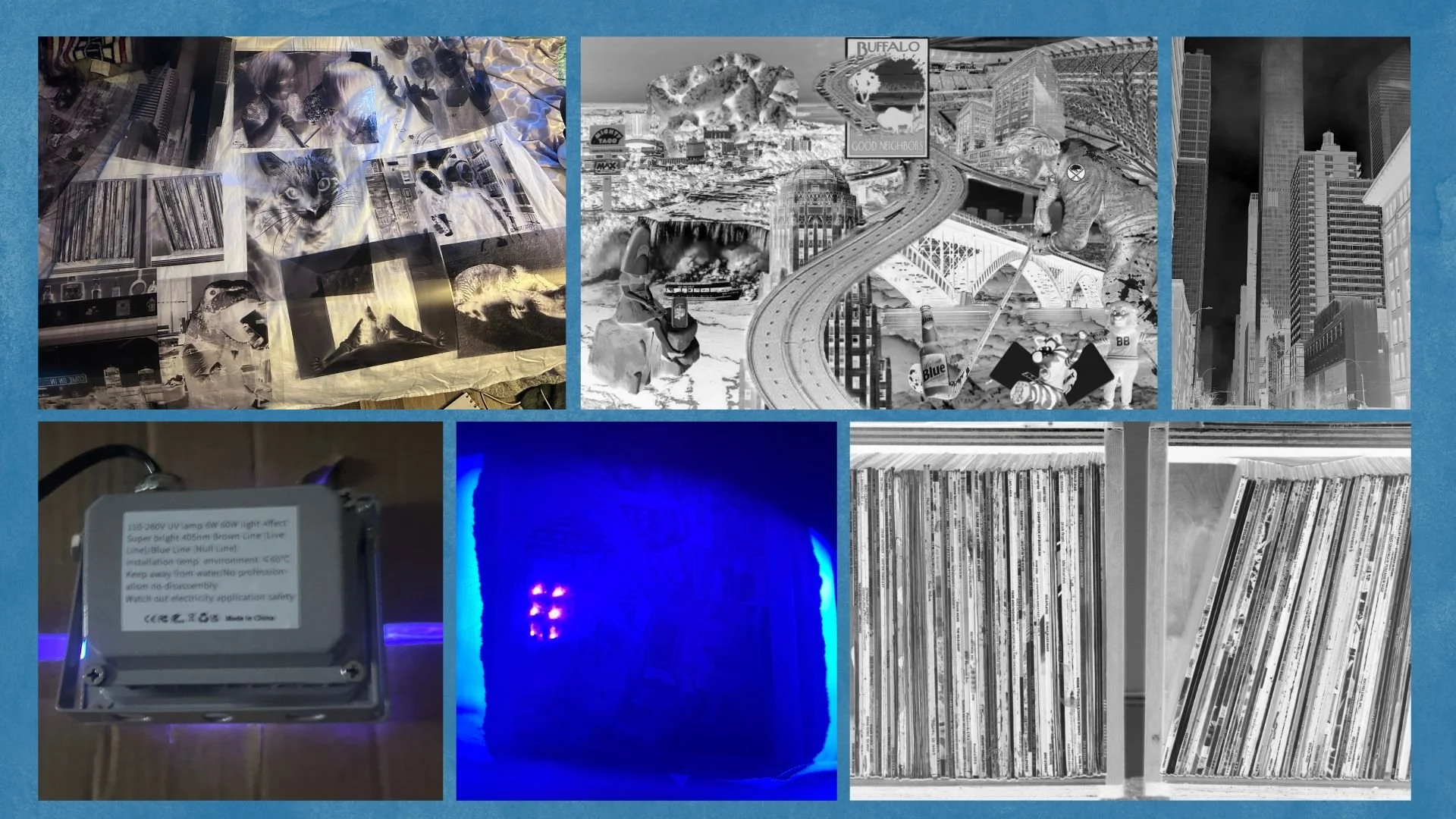
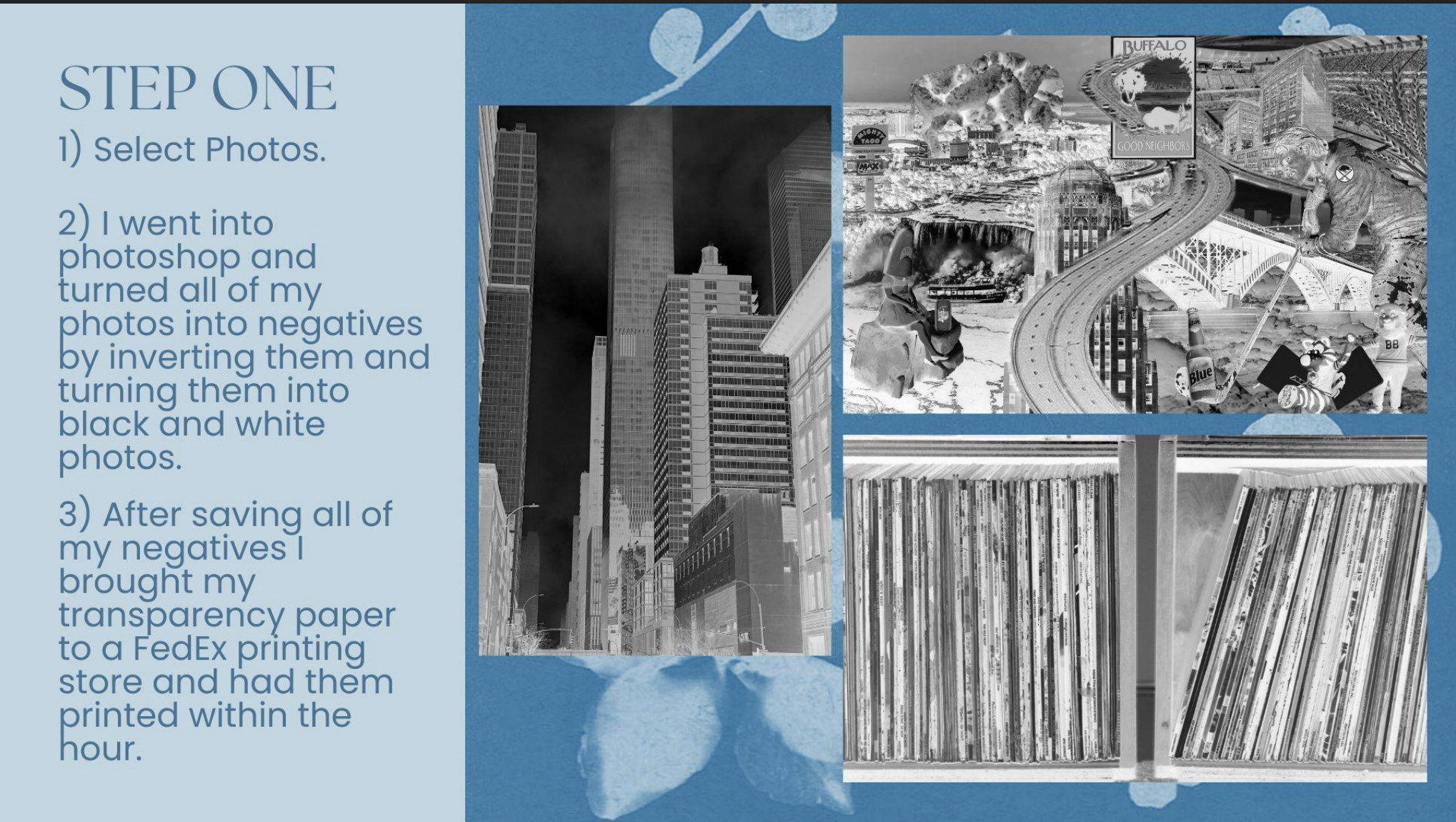
I began by selecting meaningful personal photographs and transforming them into high-contrast negatives using Adobe Photoshop. These images were then printed onto transparency paper in preparation for the cyanotype process.
Throughout this stage, I applied strong decision-making and design skills to determine the placement and composition of each image, ensuring the final prints would feel intentional and visually balanced.
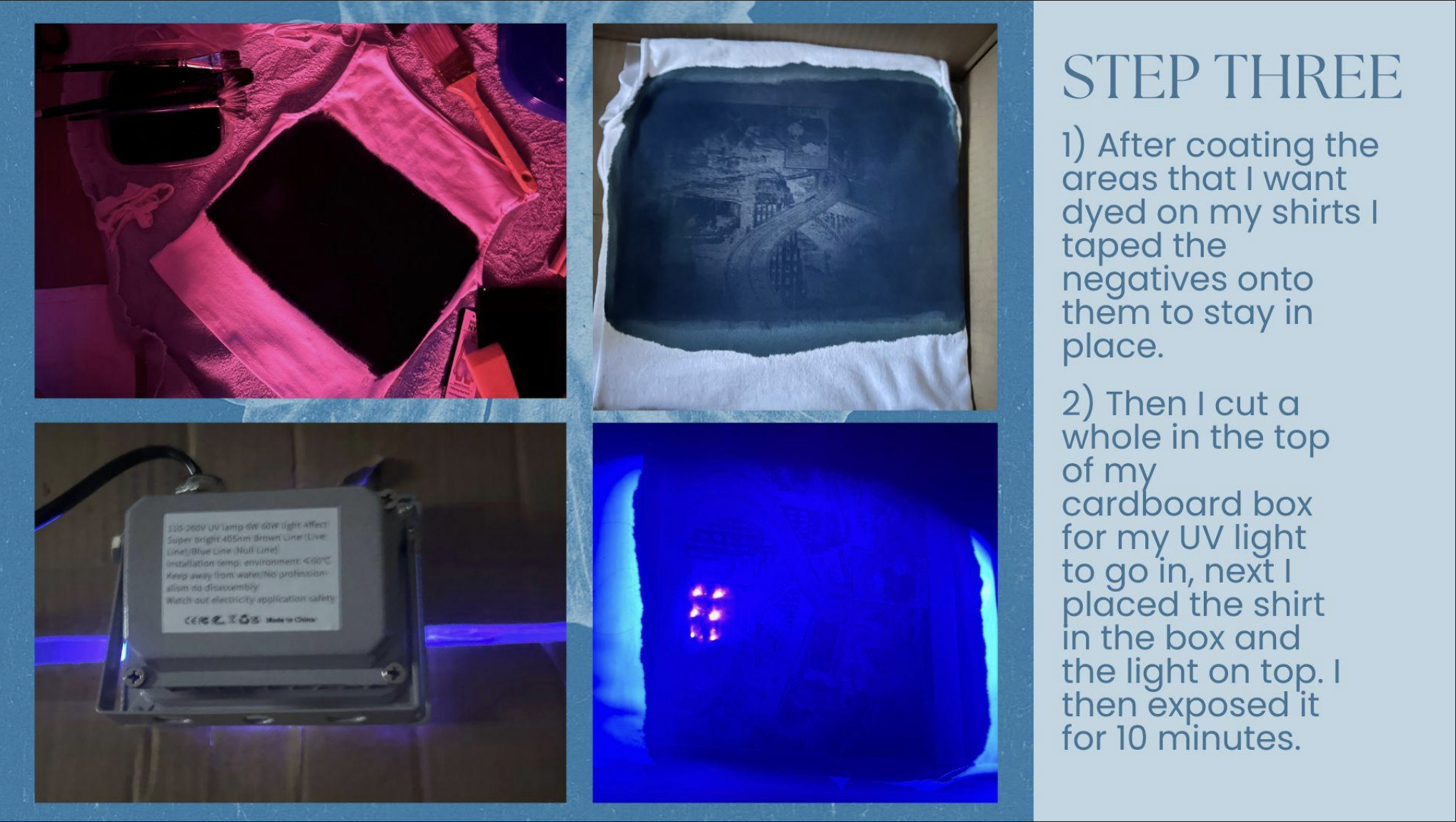
During my research, I also identified the benefits of using UV light for the cyanotype process, particularly for achieving greater consistency and control in exposure. Based on this, I chose to invest in a UV light to enhance the overall quality and reliability of my prints.
Dying Process
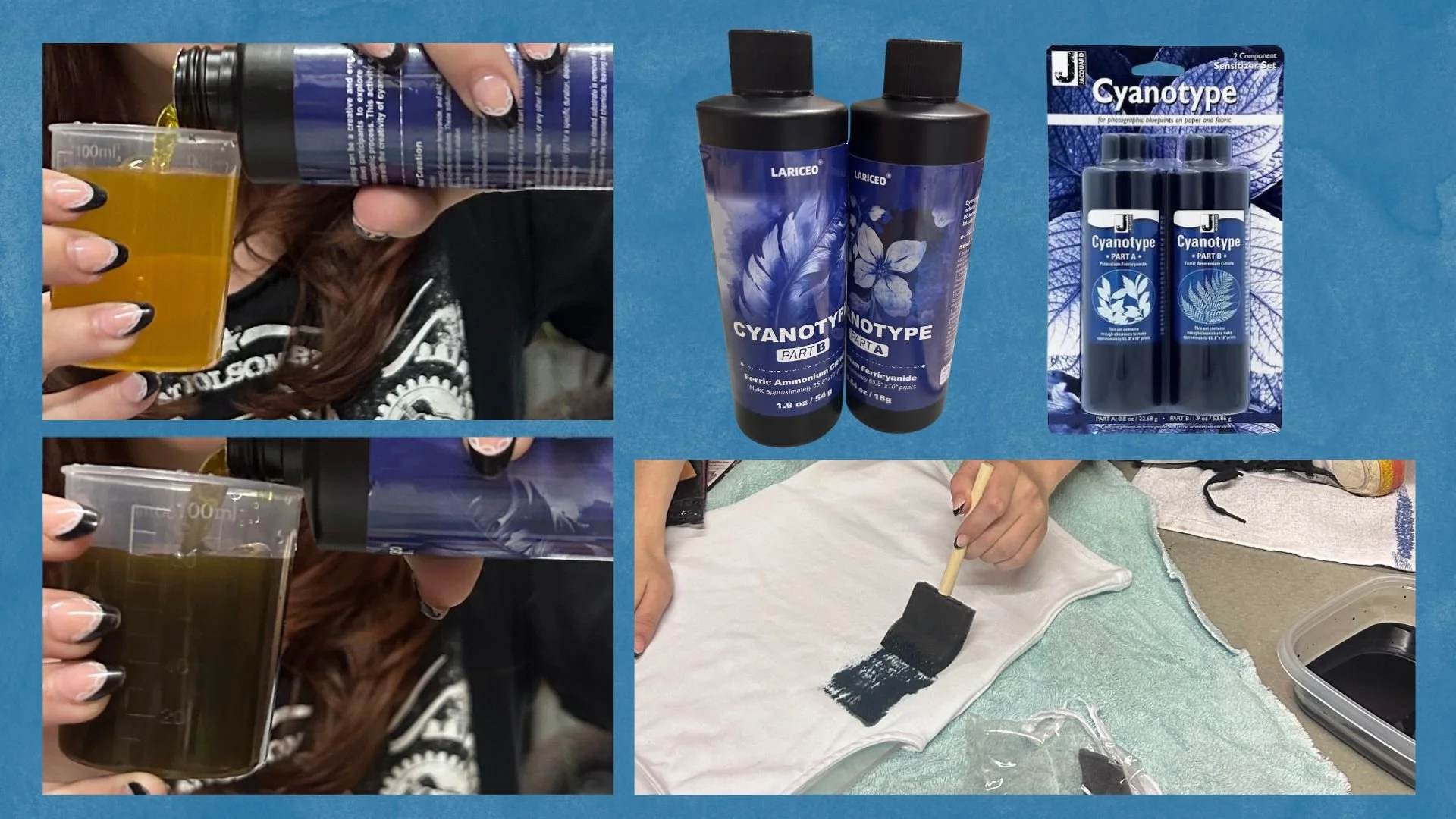
Mixing & Dying
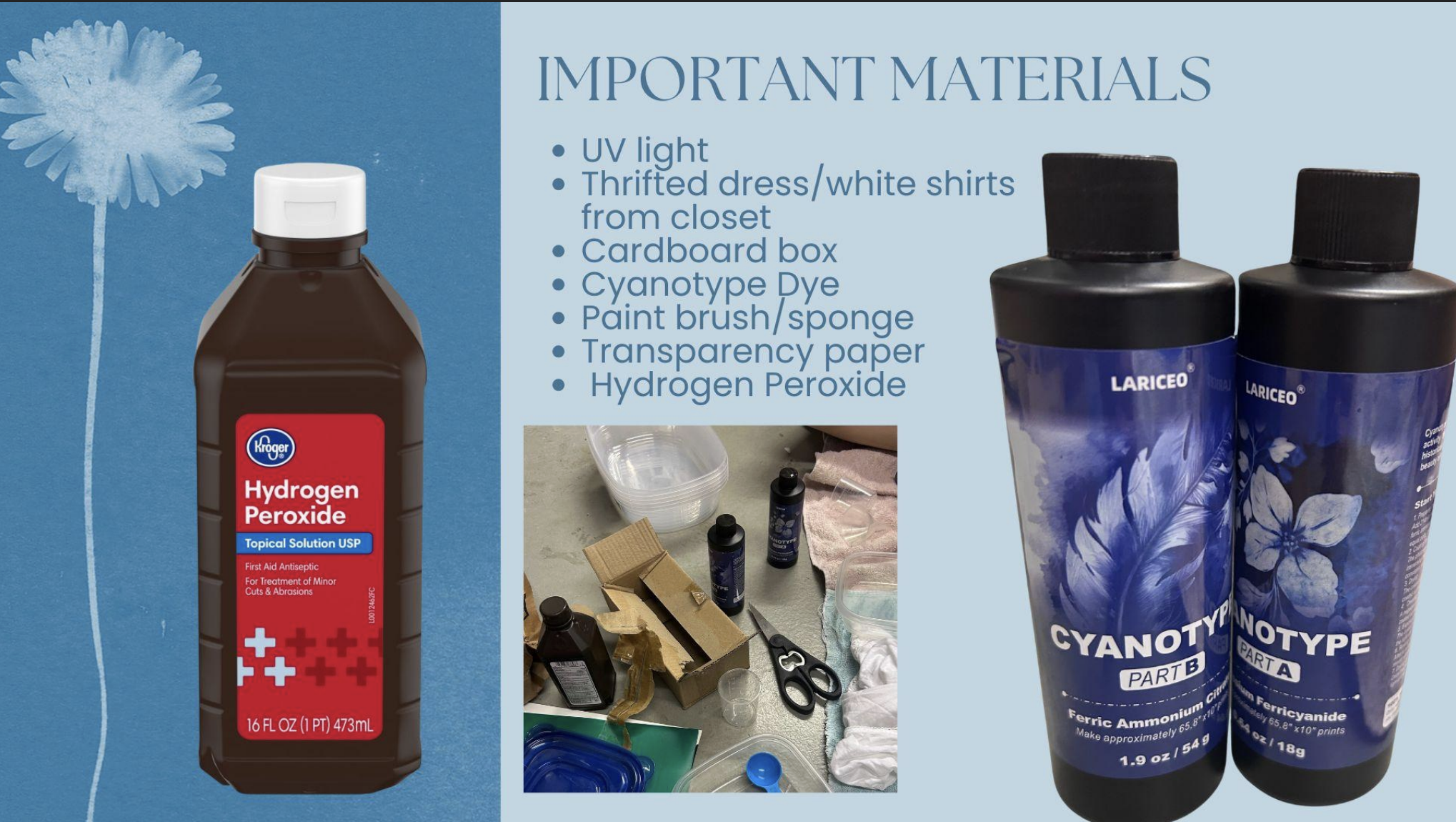
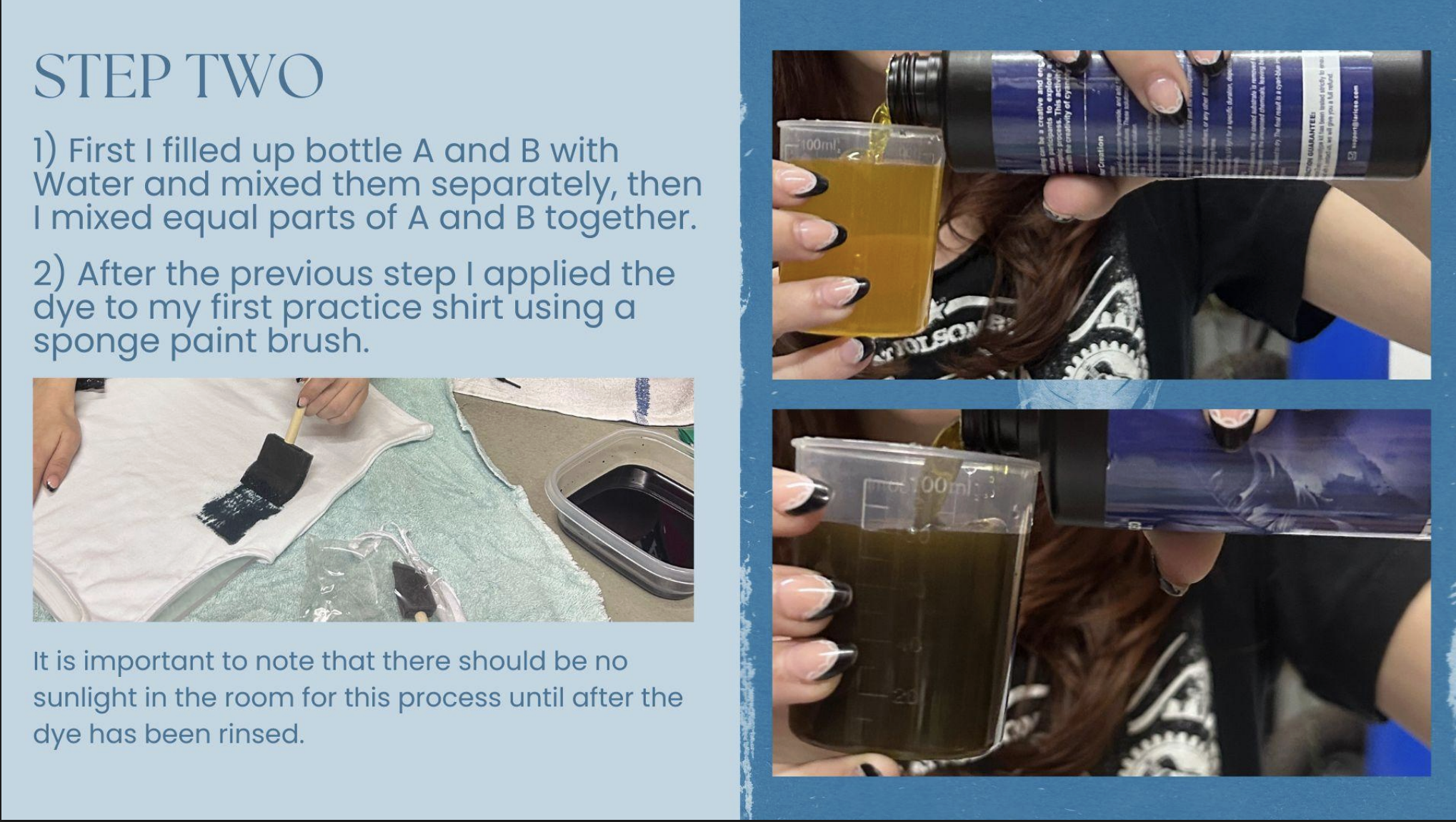
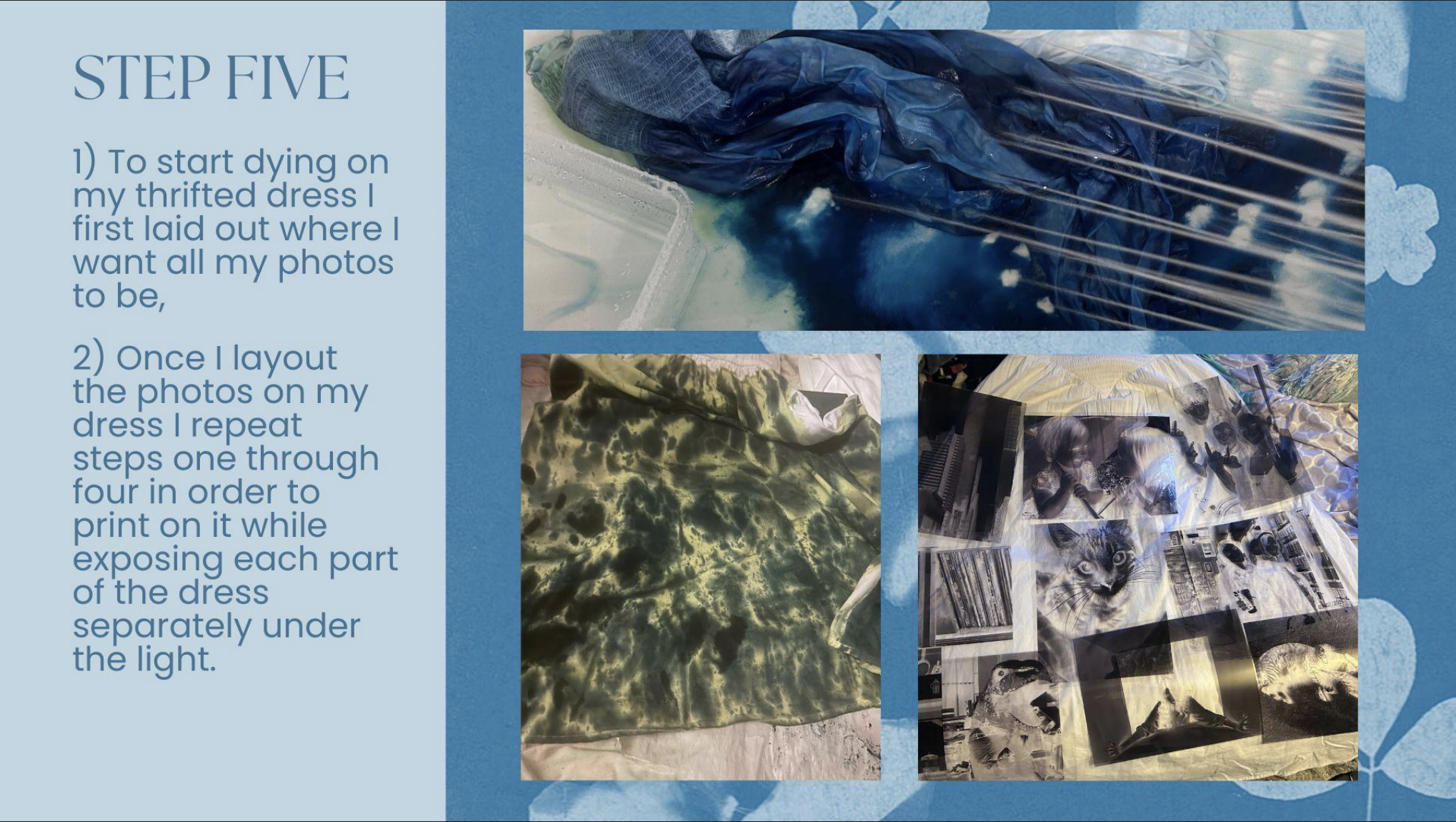
Next, I prepared the cyanotype solution and applied it to fabric in a controlled, light-free environment to prevent premature exposure. Once the fabric dried, I carefully positioned the negatives onto the surface and exposed them to UV light using a custom-built setup.
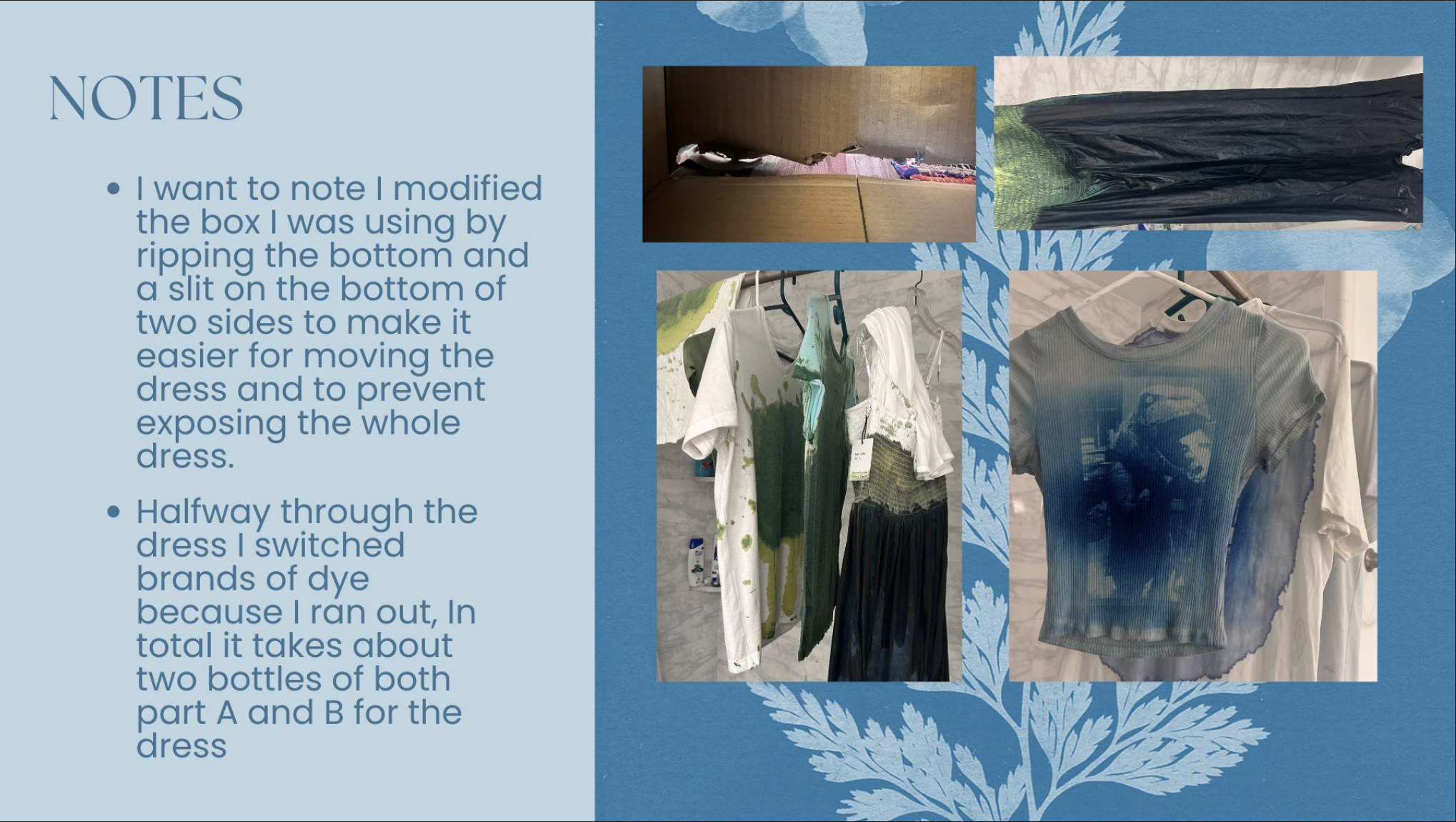
Before moving on to the final garment, I tested the process on several shirts to refine my technique and ensure consistent results. After gaining confidence, I applied the cyanotype solution to the dress and repeated the exposure process.
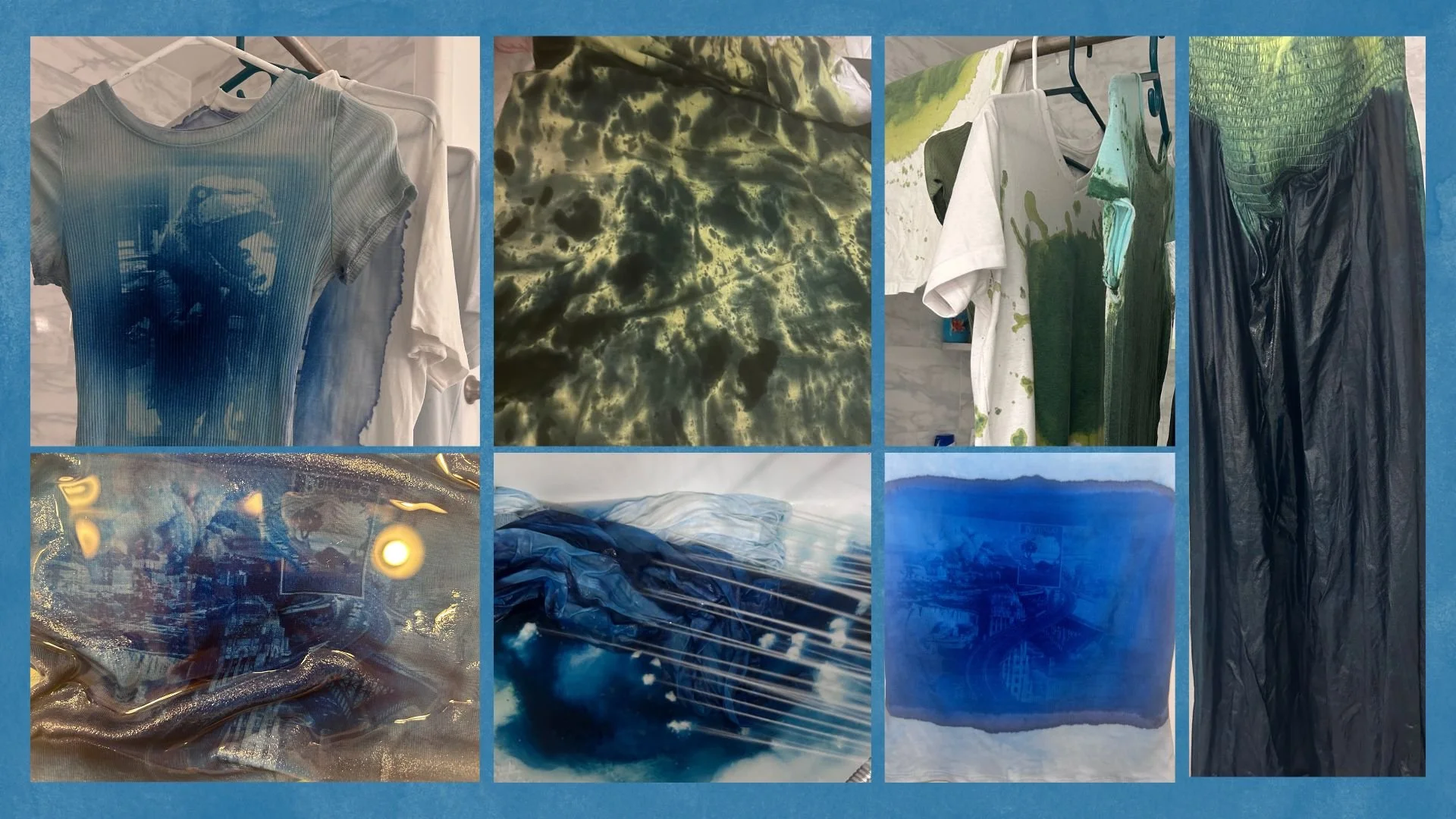
Printing & Washing
Applying this process to a full garment required working in sections. I strategically planned the placement of each image and repeated the exposure process multiple times to ensure balance and cohesion across the dress.
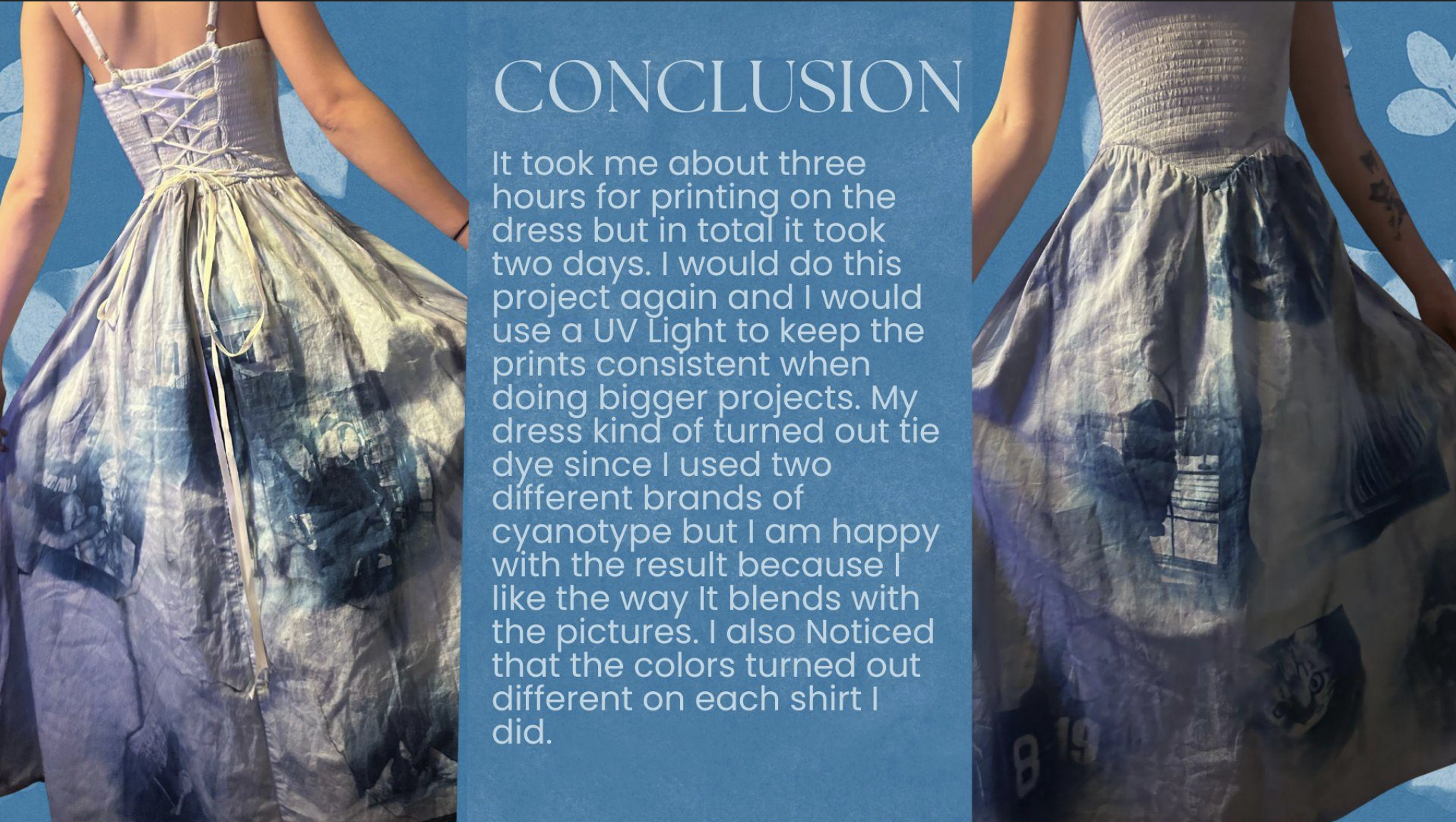
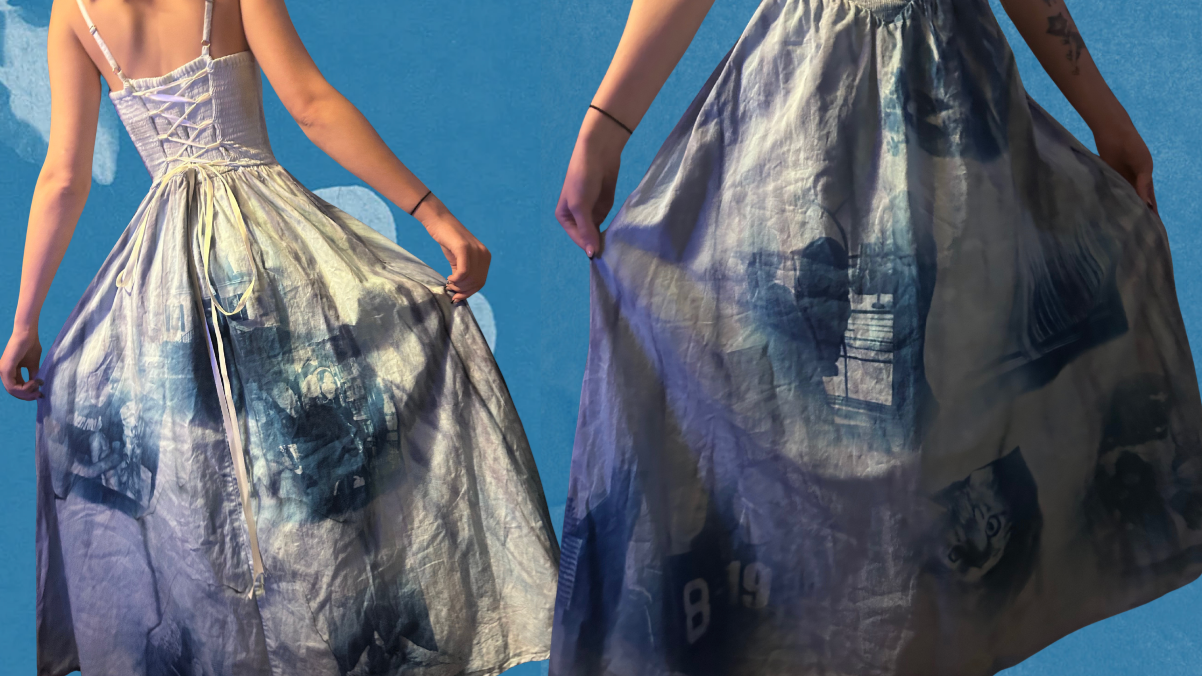
During production, I ran out of dye and had to switch brands, resulting in subtle tonal variations. Rather than correcting this, I chose to embrace it, as the variation added depth and created a layered, almost tie-dye effect that enhanced the storytelling aspect of the piece.
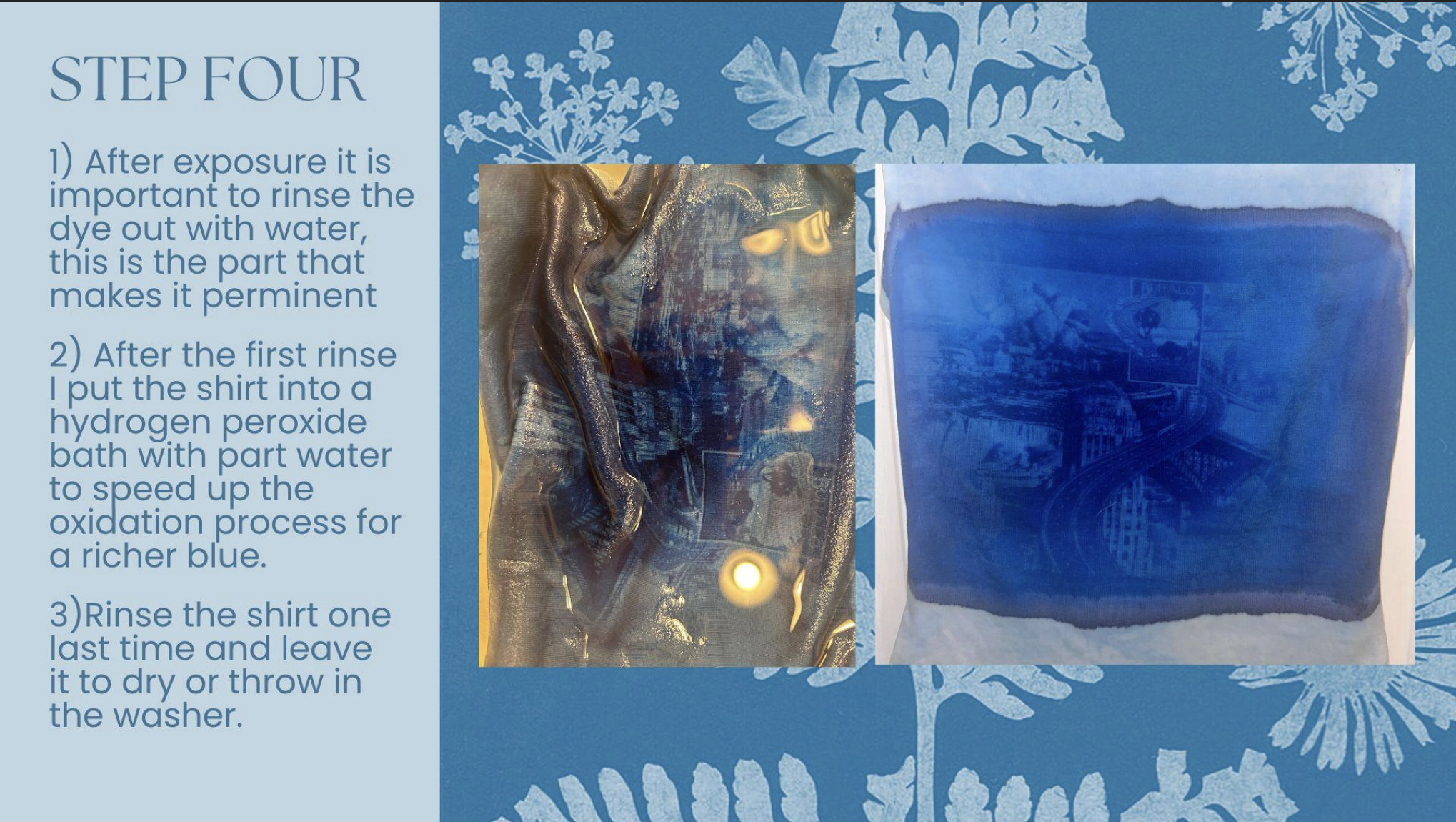
Following exposure, I rinsed the fabric to develop the prints and used a hydrogen peroxide bath to deepen and enrich the blue tones, bringing greater contrast and clarity to the final design.
The Outcome
This project reinforced my interest in combining storytelling with fashion design. By merging photography, textile experimentation, and garment construction, I created a piece that communicates personal narrative through material and process.
I also gained hands-on experience working with cyanotype printing and learned how to adapt when outcomes were unpredictable. This project strengthened my ability to think creatively under constraints and view unexpected results as opportunities rather than setbacks.